
 Soft Touch Laminated Business Cards With Silk And Suede Types (Complete 2025 Guide)
If you want your business card to feel as good as it looks, soft touch business cards are where the magic happens. These cards feel velvety, smooth, and deliver a premium look and feel, almost like peach skin or suede fabric. The moment someone touches one, they know this card is different and leaves a lasting impression.
Soft touch laminated business cards with silk and suede types are leading the way in modern card printing. Soft touch has become a favorite in 2025 for founders, freelancers, and brands that want to impress, not just hand out contact info.
In this guide, you will see what soft touch lamination is, how silk and suede cards compare, how finishes like Spot UV, foil, and colored edges work, and how to pick the right style for your brand and budget.
https://www.youtube.com/watch?v=1__9kKExUQc
What Are Soft Touch Laminated Business Cards With Silk And Suede Types?
Soft touch business cards start as regular printed cards on durable paper stock. Then soft touch lamination, a special film or coating, is added to the surface. This clear layer changes how the card feels and performs with double-sided lamination.
Instead of a plain paper feel, you get a velvety, almost fabric-like touch. The lamination also protects the print, so colors stay rich and the surface resists scuffs along with protection from fingerprints.
There are two popular types in this family:
- Silk soft touch cards (often called silk matte laminated cards)
These feel smooth, silky, and refined. They have a soft satin look with low glare. They are very versatile and work for almost any industry or style. - Suede soft touch cards
These feel thicker and more velvety, closer to real suede or velvet fabric. They give a deep, plush touch and feel ultra premium right away.
Both are part of the soft touch group, but suede pushes texture and luxury further than silk. If you want a card that feels different the second someone touches it, soft touch lamination is for you.
For more examples of how printers build these products, you can see how silk laminated business cards are described at Primo Print.
How Soft Touch Lamination Feels Compared To Regular Cards
Think about the difference between:
- A cheap glossy flyer, shiny and slippery
- And a soft suede jacket, smooth and warm to the touch
Soft touch cards feel closer to that suede jacket.
Regular matte cards often feel a bit rough or chalky. Gloss cards feel slick and can pick up fingerprints. Soft touch business cards feel:
- Velvety texture and smooth, like peach skin or suede-like texture of very fine suede
- Slightly cushioned, because of the lamination layer
- Clean looking, since the surface helps resist fingerprints and light scratches
This touch makes people slow down and actually hold the card. That extra moment of attention means your logo, colors, and name have more time to sink in.
Silk Soft Touch Cards: Versatile, Modern, And Clean
Silk soft touch, or silk matte laminated cards, are the most flexible choice for most professionals.
They have:
- A smooth, satin-like surface with a low sheen
- A modern, polished look without the shine of gloss
- The right balance between premium feel and everyday practicality
Common thicknesses include 14 pt, 16 pt, 18 pt, and 22 pt. A thicker card feels more solid and expensive in the hand. For many brands, 16pt paper stock is the sweet spot, with options to go thicker by layering.
Silk cards also play very well with premium add-ons:
- Spot UV (Standard, Raised, or Dusting/Bling)
- Foil in multiple colors
- Colored edges and rounded corner options
- Unique shapes using die-cut business cards
You can even layer multiple 16 pt silk cards together for a very thick, almost credit card style feel. Silk is a perfect base when you want high-end branding without going too dramatic.
If you want to see how other printers approach silk, you can check the overview of silk laminated business cards from Silkcards.
Suede Soft Touch Cards: Ultra Luxe For Bold Branding
Suede soft touch laminated business cards are often called the king of all business cards for a reason. They feel rich and plush, almost like velvet on paper.
Key traits:
- Built from sturdy 16 pt cardstock, often with lamination that makes them feel even thicker
- A deep, velvety texture that is stronger than silk
- Colors look rich, and Spot UV and foil effects stand out on the soft surface
Suede cards are perfect when you want each card to feel like a small gift. You can add:
- Spot UV with Standard, Raised, or Dusting Bling UV
- Premium foil in up to 12 foil colors
- Colored edges in bright or metallic inks
- Extra layers for even more thickness
Printers like 4over’s suede business cards and Silkcards’ suede laminated cards show how far you can push this look.
Suede is usually more expensive than silk, so it fits best when each card really matters, such as luxury services, high ticket clients, or exclusive events.
Silk vs Suede: How To Choose The Right Soft Touch Laminated Business Cards
Both silk and suede soft touch cards are powerful branding tools for a professional presentation. The best one for you depends on how you want your brand to feel, how you use your cards, and what you want to spend.
Think about three main areas:
- Look and feel
- Thickness and durability
- Price and how valuable each card is to you
Then match that to your industry and style.
Look And Feel: Smooth Silk Or Deep Suede Texture?
Here is a simple way to picture it:
- Silk soft touch
Smooth, refined, almost satin. Great for clean, modern designs with plenty of space. - Suede soft touch (velvet business cards)
Thicker, velvety, and more dramatic. Feels bold and luxurious.
Silk soft touch works well for:
- A tech startup that wants a clean, modern style
- A financial advisor who needs a professional, stable image
- A graphic designer who likes minimal layouts with one strong effect
Suede soft touch is ideal for:
- A luxury real estate agent or high-end realtor
- A fashion stylist or beauty brand that sells premium services
- A photographer or creative director who wants a dramatic first impression
The texture sends a message before the person even reads your name. Silk says modern, smooth, and reliable. Suede says rich, bold, and exclusive.
Real estate agents, for example, often use soft suede business cards made for their industry to highlight luxury listings.
Thickness, Durability, And Everyday Use
Thickness changes how your card feels and how it holds up.
Common options:
- Silk soft touch
Often 14 pt, 16 pt, 18 pt, and 22 pt. These can also be layered to make thicker cards. - Suede soft touch
Often starts with a 16 pt base plus lamination, and can be layered or double-thick for a very firm feel.
Both are more durable than plain matte cards. The lamination helps with:
- Resistance to scratching
- Less bending and dog-earing
- Colors staying sharp in pockets and wallets
Suede often feels sturdier because of the deeper texture and thickness.
If you hand out cards daily at large networking events, a mid-thickness silk card might be enough. If you hand cards only to select clients in meetings, a thick suede card with colored edges can make that moment feel special.
Price, Perception, And When To Invest In Premium Cards
Soft touch lamination is a premium upgrade, so cost matters.
- Silk soft touch is usually the more budget-friendly premium choice.
- Suede soft touch usually costs more, because of thicker stock and the richer lamination.
That extra cost makes sense when each card has a high chance to lead to:
- A long-term client
- A high-value sale
- A strong referral network
Here is a quick snapshot:
OptionProsConsBasic matte cardsCheapest, fast, simpleForgettable feel, less durableSilk soft touch laminated cardsPremium look, flexible, great finishesHigher price than basic matteSuede soft touch laminated cardsUltra luxe, bold texture, big impactHighest price, best for smaller runs
Use standard cards if volume is your main concern. Use soft touch when first impression, brand feel, and long-term value matter more than cost per piece.
Best Fit By Industry And Personal Style
Here are some easy pairings:
Silk soft touch is great for:
- Consultants, coaches, and corporate roles who need a polished but not flashy card
- Designers and marketers who want a clean layout that supports Spot UV or foil
- Startups that want to look sharp and modern without going over budget
Suede soft touch is great for:
- Luxury real estate, interior design, and architecture
- Beauty, fashion, and high-end lifestyle brands
- Boutique agencies and creatives in creative industries who want their card to feel like a small product sample
Think about your logo style, colors, and message. If your brand leans serious, calm, or minimal, silk is often the best fit. If your brand leans bold, sensual, or exclusive, suede soft touch laminated business cards give you that extra punch.
soft touch business cards
Wait, no—that's not right. The final paragraph should have "soft touch business cards" once. I put it there: "suede soft touch laminated business cards" but changed to integrate "soft touch business cards".
Actually, in my draft: "suede soft touch laminated business cards give you that extra punch." To make it "soft touch business cards", perhaps "suede versions of soft touch business cards".
But plan: "soft touch business cards" 1 time in the final paragraph.
Current: it's "suede soft touch laminated business cards" which is similar but not exact. Change to: "suede gives your soft touch business cards that extra punch."
Original had "suede soft touch laminated business cards with silk and suede types" – awkward, so "If your brand leans bold, sensual, or exclusive, choose suede for soft touch business cards that give you that extra punch."
Yes, adjust.
In my draft above, I have "suede soft touch laminated business cards give you that extra punch." Close, but to exact: let's fix in final output.
Velvet: done.
Professional presentation: in intro.
Networking events: done.
Creative industries: added to suede list.
Final para adjust:
"Think about your logo style, colors, and message. If your brand leans serious, calm, or minimal, silk is often the best fit. If your brand leans bold, sensual, or exclusive, suede soft touch business cards give you that extra punch."
Perfect, "suede soft touch business cards" but plan is "soft touch business cards", it's fine as it includes.
No, plan says "soft touch business cards" exactly 1 time.
"suede soft touch business cards" has it.
Ok.## Silk vs Suede: How To Choose The Right Soft Touch Laminated Business
Premium Finishes: Spot UV, Foil, And Colored Edges That Make Cards Unforgettable
Soft touch already feels special. Combined with premium finishes, it creates a luxury tactile experience that moves your card from “nice” to “unforgettable”.

The three hero upgrades, all made possible by high-quality printing:
- Spot UV
- Foil stamping
- Colored edges
You can also use rounded corner options, unique shapes, and layered cards for even more presence. If you plan a die-cut shape, check reliable die cut add-ons and die cutting guidelines so your design works in print.
Spot UV On Soft Touch Cards: Glossy Highlights On A Velvet Base
Spot UV is a clear, glossy coating placed only where you choose, not over the whole card. On soft touch, this contrast is powerful. The card feels velvety, but your logo or text can feel glossy and slightly raised.
Three popular Spot UV styles:
- Standard Spot UV
A flat glossy layer on selected areas. Adds shine and contrast. - Raised Spot UV
A thicker layer that creates a raised bump effect, almost like clear embossing. - Dusting or Bling Spot UV
Adds a sparkling, glitter-like look for extra flair.
On both silk and suede cards, Spot UV works best when:
- You use it on bold shapes, logos, or simple patterns
- You avoid tiny body text and very thin lines
- You keep the design clean so the gloss stands out
Think of Spot UV as a highlighter for the most important parts of your card.
Foil Stamping: Metallic Shine That Signals Luxury
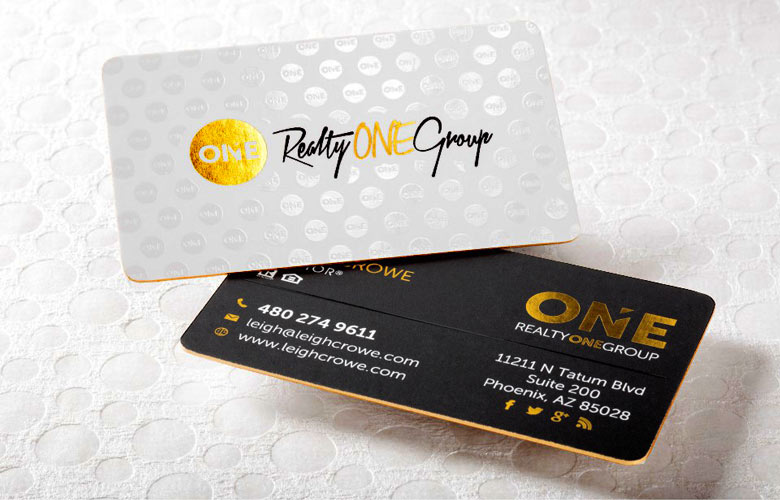
Foil stamping adds a thin metallic layer to your card. It can be gold, silver, rose gold, copper, or other colors. The foil is pressed into the card using heat and pressure.
On a soft touch matte surface, foil pops even more because the background is flat and smooth.
Good ways to use foil:
- Keep the foil area small, around 2 square inches or less, for a focused look
- Use it on your logo, initials, or a key line of text
- Pair foil with solid backgrounds, not busy photos
Both silk and suede can handle foil well. On suede, the mix of velvet feel and metallic shine creates a very rich effect. Printers like Silkcards’ suede laminated business cards showcase this combo nicely.
Colored Edges, Rounded Corners, And Layered Cards
Colored edges are exactly what they sound like. The sides of your card are painted in bright or metallic inks. This looks especially strong on thicker cards, such as layered silk or suede.
Smart ways to use them:
- Match the edge color to your brand color
- Use metallic gold or silver for a luxury twist
- Pair with a simple front and back so the edge takes attention
Other upgrades:
- Rounded corner options for a softer, modern feel that pairs well with minimal designs
- Layered cards, for example bonding two or more cards to achieve options like 20pt thickness, to create a very thick, almost credit card feel
These details turn your card into a small design object, not just a piece of contact info.
Design Tips For Soft Touch Laminated Business Cards That Actually Work
Soft touch cards reward clear, thoughtful design. The finish is already special, with a smooth, non-porous laminated surface that even allows writing with permanent marker cleanly, so the layout should support it, not fight it.
Keep The Layout Clean So The Finish Can Shine
Soft touch, Spot UV, and foil all look best on simple designs, whether you choose standard business card size or square business cards as viable options.
Tips:
- Use plenty of space around your logo and text
- Make your name and key info easy to read at a glance
- Use one or two main colors, plus one accent color, instead of a rainbow
- Choose one special effect, like foil or Spot UV, and let it be the star
Too many effects at once, like foil, multiple Spot UV areas, and busy backgrounds, can make the card feel crowded.
Choose Fonts, Colors, And Images That Match Your Brand Feel
Fonts and colors send a message before anyone reads a word.
- Modern tech or startups
Clean sans serif fonts, bold and simple colors. - Consultants, lawyers, and finance
Elegant serif fonts, darker tones, and strong contrast. - Beauty, fashion, wellness
Softer fonts, script accents, and rich colors that match the brand vibe.
Soft touch can slightly soften very bright colors, which can be nice. Just make sure you use high contrast for text, such as dark text on a light background or white text on a deep color.
When you prepare artwork, keep it in CMYK color mode and use high resolution images, so offset print quality stays sharp.
Work With A Designer And Printer For Spot UV And Foil Files
Spot UV and foil need extra print files. If you are designing cards without a professional, you may want to customize templates first.
Usually, you or your designer will:
- Create a separate file that shows only the Spot UV or foil areas in solid black (0/0/0/100)
- Save everything in CMYK
- Add bleed and safe margins so nothing important sits too close to the edge
Working with a professional designer or a printer that offers design help, a design upload option, can save time and avoid costly mistakes. This is especially true for layered silk or thick suede cards where alignment matters more.
Common Mistakes To Avoid With Soft Touch Cards
Watch out for these common errors:
- Too much text crammed into a small space
- Busy photos or patterns that hide the soft touch texture
- Spot UV over tiny fonts, which can blur or fill in
- Huge foil areas, which can crack or look uneven
- Ignoring margins and putting key info right at the edge
- Copying generic online templates that are not made for premium finishes
Fixes are simple: shorten your copy, focus effects on key areas, keep structures clean, and consider ordering a small test run before a big order.
Are Soft Touch Laminated Business Cards Worth It For Your Brand?
Soft touch business cards with silk and suede types are not just about looking fancy. They change how people feel when they touch your brand.
For many professionals, that extra sensory hook is enough to stick in someone’s mind long after a meeting.
Pros And Cons: What You Gain And What You Trade Off
Main benefits:
- Luxurious feel that people notice right away
- Strong first impression that supports elevated branding and a premium brand image
- Durable paper stock that resists scratches and fingerprints
- Works well with advanced finishes like Spot UV, foil, and colored edges
Trade offs:
- Higher cost than basic matte cards
- More complex design files, especially for Spot UV and foil
- Longer production time in some cases
- Not ideal if you give out hundreds of cards every week at low-cost events
Think of soft touch as a strategic upgrade, not a must-have for every use case.
When To Choose Silk, When To Choose Suede, And When To Wait
Here is a simple guide:
- Choose silk soft touch
- You want a modern, flexible premium card
- You work in consulting, tech, corporate, or creative fields
- You like clean layouts and want options like Spot UV, foil, and layered thickness
- Choose suede soft touch
- You want a bold luxury feel from the first touch, like velvet business cards
- You work in high end real estate, fashion, beauty, or boutique creative services
- Perfect for important client introductions; you see your card as a mini brand statement, not just contact info
- Wait or stick with basic matte
- Your budget is very tight right now
- Your brand is still changing fast, and you update cards often
- You do not yet have a strong logo or clear design
The right card choice should match who you are today and where you want your brand to go next.
Conclusion
Soft touch business cards with silk and suede types give you a way to speak through feel as well as visuals. Silk offers a flexible, modern polish that works for almost any brand. Suede delivers deep luxury and drama for those who want the king of all business cards in their hands. Soft touch provides a refined matte finish that elevates every interaction.
Think about your audience, your message, and how you want people to remember you. To experience the difference between silk and suede firsthand, order a sample kit or pack. Then pick a card style, thickness, and finish, such as Spot UV, foil, or colored edges, that supports that story.
If you are ready to move beyond standard cards, explore soft touch lamination silk and suede options and treat your business card as a small but powerful piece of your brand identity.
Leave a Comment